ServerLinux x64 or ARM64
Server installation
A managed path from a Linux server to your living room.
Finetic is still privately distributed. At commercial launch, the managed installer is intended to provision a signed compiled release, PostgreSQL and an unprivileged system service on a supported Linux host.
Private developmentWorking product · Controlled access · No public download
Verify signed releaseCompiled production artefact accepted
CompleteProvision PostgreSQLApplication database is writable
Complete03
Configure media toolsFFmpeg capabilities and hardware are tested
Running04
Open first-run wizardCreate the administrator and select libraries
NextDatabasePostgreSQL 15+
Media toolsFFmpeg and FFprobe
DeliverySigned compiled release
Designed as a system, experienced as a product.
The technical depth remains available without turning the normal viewing experience into a server dashboard.
Current server requirements
The current supported production architecture uses a 64-bit Linux x64 or ARM64 host, Node.js 24–26, FFmpeg and FFprobe, PostgreSQL 15 or newer, and writable storage for application data and the media cache.
- A practical starting point is two modern CPU cores, 4 GB RAM and SSD-backed cache storage
- Media folders can remain read-only when Finetic is not expected to rename or modify files
- Intel Quick Sync, VAAPI or NVIDIA NVENC is recommended for demanding or concurrent video conversion
- A stable LAN and correct reverse-proxy range handling are important for remote playback
The first-run flow remains graphical
Initial setup creates the first administrator, verifies the database and media tools, configures optional metadata enrichment, selects library folders through the filesystem browser and starts catalogue analysis.
Updates remain inside Finetic
Entitled installations compare signed release metadata, download compiled production artefacts, verify them, create a recoverable backup, install the release and restart the service. Customer bundles do not contain the private source repository or signing infrastructure.
Product evidence
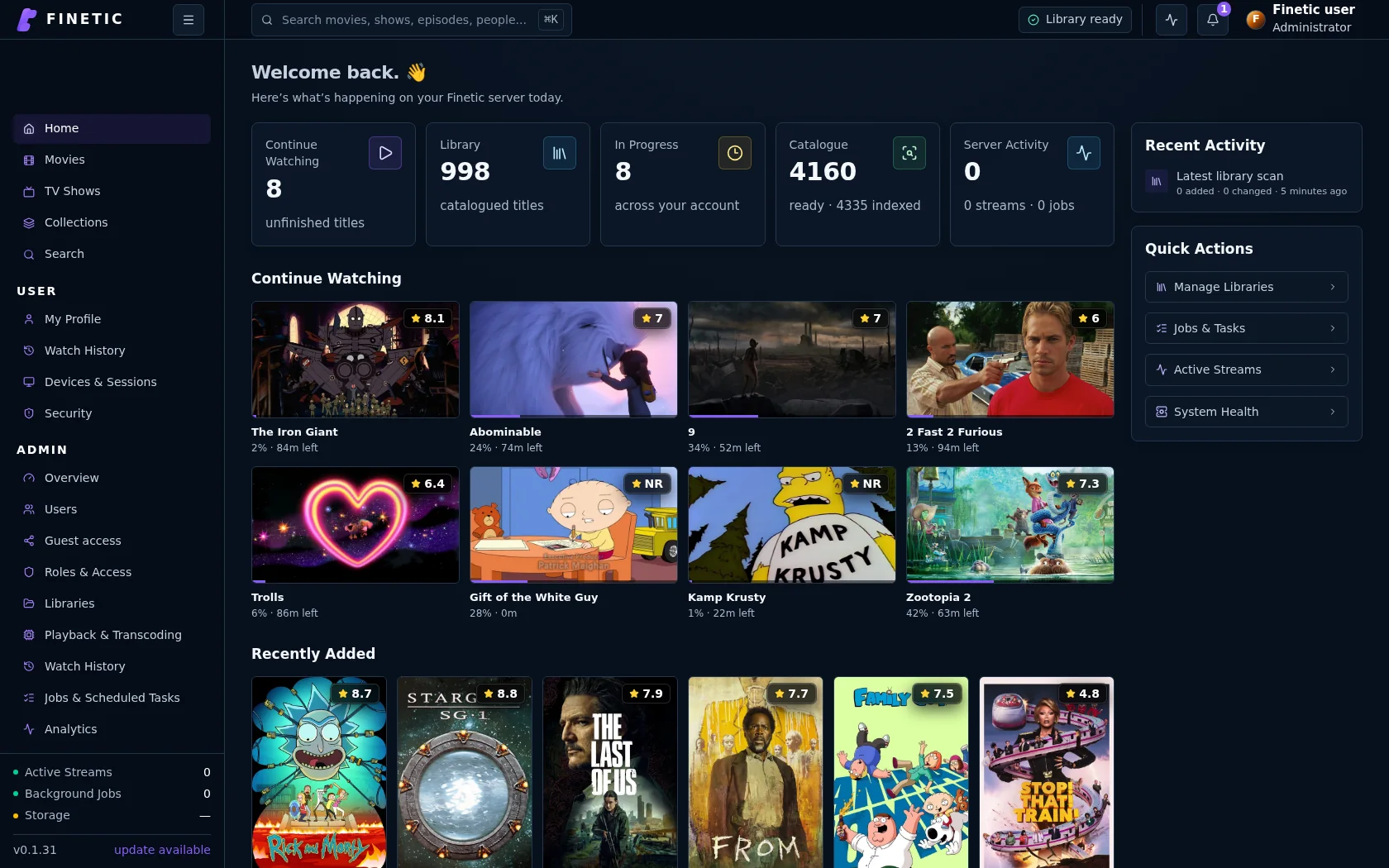
Setup ends in a complete product.
The managed path leads into the same viewer and administrator experience shown throughout Finetic.
Private testing programme
See whether Finetic earns a place in your home.
Selected testers receive an expiring licence and a private installer after manual review. No public repository or reusable download is exposed.